|
|
|
|
|
|
|
 |
|
|
|
|
|
|
|
|
|
|
|
| |
| 
1-Gurum
Gudum
2-Woody Woodpecker
(Everybody Thinks I'm Crazy)
3-LSD
4-To Burn Or
Not To Burn
5-Bailarina
6-Deve Ser
Amor
7-Nobody Knows
8-Cacilda
9-Imagino
10-Ai Garupa
11-Encantamento
12-Carrossel
13-Tacape
|
|
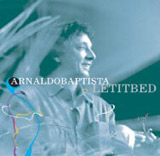
LET
IT BED - (2004) – Produção: John
Ulhoa
The idea of recording Let it Bed started to materialize
itself when John Ulhoa of Pato Fu band went to Juiz
de Fora to install a series of audio softwares in Arnaldo’s
PC. John and Rubinho Trol started to show Arnaldo the
possibilities of these new technologies, only available
years before in very expensive studios and which were
now perfectly off the shelf, to home use. “This
is why this record is the encounter of Arnaldo with
this technology”, explains John. “That was
important for us. We did not want a CD that would sound
as a modern type electronic music recording with samples
from Arnaldo. That would be too easy. We wanted him
to record his new songs on his own way and then we would
just bring a finishing touch at the level of his talent”.
John and Rubinho took to Juiz de Fora enough equipment
to make a good home studio. They soon noticed that Arnaldo
wanted to play everything and that he would go from
one instrument to another very quickly. So they scattered
microphones all over the place with everything set to
record and to keep up the creative momentum.
“Rubinho brought his PC from London. We recorded
using software Cubase and an M-Audio Delta 44 interface,
so we could record four channels at the same time. It
sounds little but it would be enough for this record,
since Arnaldo would play everything, one instrument
at a time”, says John. “AKG lent us microphones
and headphones and I took with me preamps, a mixer,
a guitar and some other things. One curious item was
the Pignose guitar with the loudspeakers on its body,
which Arnaldo experimented and ended up using in some
recordings”.
John gave Rubinho some basic instructions, “enough
to avoid some irreparable technological wrongdoing.”
But it was soon clear that the most important were the
moment, the atmosphere, the tranquillity Arnaldo had
to have to record everything he wanted as many times
as he wanted and when he felt like it. And that Rubinho
managed pretty well.”
“After all was recorded, we went back to my studio
in Belo Horizonte were we translated all the Cubase
sessions to my studio system, Logic Audio/Mac. We had
nothing else to record. We only added some programs
and virtual instruments,” explains John. All was
edited and mixed piecemeal at John’s studio. “Every
time Arnaldo visited, we would listen to the work and
feel happier with it.”
|
|
|
 |
|
|
| |
| 
1-Será
Que Eu Vou Virar Bolor?
2-Uma
Pessôa Só
3-Não
Estou Nem Aí
4-Vou
Me Afundar Na Lingerie
5-Honky
Tonky
6-Cê
Tá Pensando Que Eu Sou Loki?
7-Desculpe
8-Navegar
de Nôvo
9-Te
Amo Podes Crer
10-É
Fácil
|
|
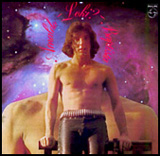
LÓKI?
(Mad?) – ARNALDO BAPTISTA - (Philips, 1974) –
Producer: Arnaldo Baptista
Loki,
the Asgardian god of cheating and madness, couldn’t
have predicted such insanity: in 1974, alone with his
piano in his room in the Serra da Cantareira, a 26 year
old boy, Arnaldo Dias Baptista, which all believed to
be disoriented, nurtured the seed of the album which
would forever change the face of Brazilian music.
“Loki?”,
the album, was recorded in one single breath, with no
repeated takes, at the Eldorado studio, in São
Paulo, on 16 channels. The album has 10 tracks and lasts
33 minutes, it does not lend itself to one single guitar
riff (a heresy for the times) and merges synthesizers
with guitar, orchestral arrangements with clarinet and
organ. Its musicality is visionary: there’s sambalanço,
glam, British style pop balads, North American rockabilly,
MPB, classical and progressive digressions. Invention
is the album’s only frontier, but this is not
a nerd’s Cartesian experimentalism – Arnaldo
non- ceremoniously broke through the doors of perception.
“Loki?”
houses an instrumental journey between Chopin and Elton
John in the song “Honky Tonky”, and even
a certain orientalism, that slides its way into the
blues and arrives at traditional MPB on the 12 string
guitar in “É fácil”. Arnaldo
is a one man band unfolding himself in search of the
right effect, as with the Moog synthesizer in “Desculpe”
and “Te Amo, Podes Crer”. When he sings
“where is my rock n’ roll”, that is
pure Jerry Lee Lewis, until he adds a “I’m
going back to Cantareiraaaaaa” which is pure MPB,
anarchizing references on the way.
The
ex-Mutante had the lucidity (financially supported by
Robert Menescal, artistic director of Phillips and Marco
Mazzola who produced him) to seek the help he needed.
The maestro Rogério Duprat, at the time an ex-tropicalista,
abominated what rock had become then: an old guitar,
bass and drums formula, a musical label, a limitation
of the imagination. Due to this conjecture, he left
everything and went to live in a homemade woodwork shed
in Itapecirica da Serra. While carving out two of Aranldo’s
songs (“Only One Person” and “You
Thinkin’ I’m Crazy?”), he had the
feeling there was an entire world yet to unveil. He
was our George Martin.
This
is a record to be heard on high volume, Arnaldo recommends.
No recommendation was needed: the album was so important,
it would resonate eternally, while it’s time fell
behind. Since January of that year there was an iron
fisted general, conducting the military dictatorship,
Ernesto Geisel. This permanent shadow made it so that
all the art of that time had a combative, engaged feel
to it. Lyrically, Arnaldo chose his own existential
anguish as being the universe which needed to be understood,
and left as his legacy the Bible of an alternative utopia.
“We all stay together. Reunited as one person
only”, he sang in “You Thinkin’ I’m
Crazy?”
Arnaldo’s
record came to Earth with an individual esthetic vision,
which led him to be compared to Pink Floyd’s Syd
Barret. There was no equivalent amongst his contemporaries,
as there still isn’t. His original fuel was an
amorous delusion, as in 90% of pop, but the result was
universal illumination.
In
the rest of the world, the promise of a brilliant technological
future was hinted at. In that year, Kraftwerk released
the classic “Autobahn”. The synthesizer
family then received the revolutionary Moog Satellite,
which would be very much used by Vangelis on the soundtracks
of new movies.
Arnaldo
Baptista transcended his dimension, he lived in a spaceship.
He had gone to peaks of pop glory with The Mutantes,
but as soon as he left the band, he kept his vision
way beyond. On the cover photo, with his brown leather
pants and no shirt, looking like he’s waiting
for someone or something, he seems to be saying he has
no voracity for the future nor reverence for the past.
He created his reality alone, attached to his dreams
and visions, and that is what prevails in “Loki?”.
Sean
Lennon’s and Kurt Cobain’s confessions on
the influence that Arnaldo Baptista and The Mutantes’
music had on their work are famous, but the span of
influence is wider still, moving through the likes of
Devendra Banhart and Kevin Parker from Tame Impala.
In Brazil, this influence stretches through generations,
noticeable in songs by Boogarins and O Terno.
It
is because of this that the Vinyl edition of the album,
by Polysom (Universal Music, 180 grams, original art,
unpublished sleeve complete with lyrics) is so symbolic:
Transcendental
album, registers the waves of influence of that moment
of transition – Arnaldo did this surrounded by
his old companions, as if he were doing an intersection.
There are support vocals by Rita Lee in two songs --
“Não Estou Nem Aí” (I Don’t
Even Care) and “Vou Me Afundar na Lingerie”
(I’m gonna drown in Lingerie) – and the
musicians are Liminha (bass; Sergio Kaffa plays bass
only on “Desculpe”) and Dinho (drums).
Don’t
shoot the pianist, is what the posters would read in
old Wild West saloons. It was a hard act to follow.
In his case, a piano was all he needed to make one of
the most fundamental records of Brazilian music.
By
Jotabê Medeiros
Translation by Rebecca Sharp
|
|
|
 |
|
|
| |
| 
1-I
Fell In Love One Day
2-O
Sol
3-Bomba
H sôbre São Paulo
4-Hoje
de Manhã Eu Acordei
5-Jesus
Come Back To Earth
6-The
Cowboy
7-Sitting
On The Road Side
8-Ciborg
9-Corta
Jaca
10-Coming
Through The Waves Of Science
11-Young
Blood
12-Train
|
|
SINGIN’
ALONE – ARNALDO – II ÁLBUM –
(Baratos Afins, 1982) – Produção:
Arnaldo Baptista. Arnaldo
Baptista talks about the album “Singin’
Alone”
When
I recorded this album, Singin’ Alone, I thought:
what’s missing in my career? Something that’s
capable of spanning all that I reach in the universe.
So, I chose a kind of language, a certain spectrum,
thoughts and entities… And everywhere I went ,
I tried to turn that into poetry. In other words, my
personality is present in my day to day life, as part
of the lyrics, as segments of my life during that time.
Another
aspect is that I play everything in this album: bass,
keyboards, guitar…sometimes I put in a harmonica,
a pandeiro, a music box- one man band… In all
the bands I’ve been there has always been a discordant
factor for me: the bass sound, would be too high; the
badly tuned amp; a very egocentric person…
In
this album, however, I tried to insert a personal side,
not only in the lyrics and songs, but also in the instrumental
and musical side, which is very important. I laid down
what was expected: the unexpected. I mix Yes, which
is a classic side, with lots of bass, with ‘Caipira’
music, which is a very rural, peculiar aspect of Brasil.
Something that spans everyone’s minds. I also
have lots of songs in English, in order to reach that
kind of mentality and philosophical thought.
Sometimes
we get lost in creativity and find the objective is
not only one, never! Both work. I wanted to expose and
show my musical and poetic creativity. That’s
why I added the English side to it.
About
the songs on Singin’ Alone
“Bomba
H Sobre São Paulo” (H Bomb over
São Paulo city) Is about what I did to reach
this depth of lyric writing. I’d walk up to the
Serra da Cantareira, a long way and I was interested
in flowers, people, cars that passed by and also my
mind, overcome by entities, planets and distant galaxies.
On that day I thought about how walking through the
Cantareira we can see the city as a separate entity,
an H bomb – something would happen. That’s
what I thought about.
“Hoje
de Manhã Eu Acordei” (This Morning
I Woke Up) is about another part of my personal life,
the place where I slept: the bedroom, the walls, this
was a thought that was not so much about roads, cars
and galaxies. A thought that was more about sheets,
company, thoughts about food, exercise etc. The passion
I had at that moment worked sometimes: “is it
too good?”
“Jesus
come back to earth” is yet another part
of my life. I was in the apartment with my mother on
Avenida Angélica, in São Paulo city, and
I didn’t feel open there, so I wrote this song.
“Corta
Jaca” (Cut jack fruit) has a rural side
to it. Suzana Braga who is Portuguese descendant, did
the ‘caipira’ voice – for her, it
was hard to speak Brazilian Portuguese, to do the caipira
accent (ah ah ah). It has a little to do with the interior
of São Paulo city. My grandfather, coronel Orácio
was mayor of Avaré so I tried to put this into
music in the form of caipira and rock n’ roll
– I made this contrast stand out.
There
is an aspect between you and the instrument, which is
translated to the piano, to the synthesizer…In
“Cowboy” I recorded my personal side with
the bass. So, I was able to make a song in which I explain
everything I feel through the instrument… Jack
Bruce.
“Sitting
on the road side” I hitchhiked to Catanduva…400km
from São Paulo…I felt like a pilgrimage,
like not being taken by anything except my exploration
and see how much I could bear, resistance wise. Kind
of hippy.
“I
fell in love one day” Like with “Cowboy”
this one is about the bass, piano and synthesizer. I
managed a greater depth of lyrics with the piano here,
because with the bass the music is heavier. So I talk
about highways and motors. Here I deeply explore more
philosophy, reasons to live…
The
piano aspect gave me more freedom with regards to my
emotions. I also talk about my searches, inspirations,
research…Thought about my mother, who played piano
years ago. This part is for her: “take me to the
best” As if she could interfere in my music, through
channeling…My mother had a universe – hours
and hours lying down, thinking about paradise. That’s
why she said “I will not wait for your death”.
I was more emotionally free with the piano. On the guitar
I am not as inspired to passion and heart as I am with
the piano.
There
is this feminine presence in the lyrics…the lyrical,
poetic, romantic side, about this importance that women
have in people’s lives. It doesn’t matter
what you think or what you are, you only have one sex
as a person. So, in order to give continuity to an important
factor of evolution, which is DNA, you need the feminine
aspect that completes it. In my poetry, the girl is
important as muse, in a platonic way…it lends
to a colourfulness, a romanticism of sorts.
“Ciborg”
This is also a topic which propels me forward in life,
as research, in this case human research, as in the
cyborg. For example: for millions of years the human
body uses in its ears, exponential numbers that have
nothing to do with mathematics. Man discovered this
number 50 years ago. Therefore, the human body is so
much more evolved than our scientific reach! Ciborg
is about us trying to make machines out of machines,
which is what we are…It is also about me riding
my bicycle and thinking: if I were a cyborg I’d
have a lot more strength in my legs. “In vain,
Ciborg!”
“Coming
Through the Waves of Science” “I
don’t know why I got so involved, when I could
just be playing” This is so deep! At times, deeper
than I am. When we talk about the feminine, we think
about a stereotype, which would be the goddess. So,
there is also a magical side, stronger channeling, greater
consciousness of everything…Then I get into “Let’s
Spend the Night Together”.
“Young
Blood” I only had a piano at home during
this period and I ended up making a garage band. The
people were younger than me, perhaps 10 years younger,
so I wrote this song, inspired by this new blood. Their
enthusiasm was great…”Lipstick kiss on you,
model”. Then the inspiration came from the Rodhia
fashion shows. I would see the models pass by and dream-all
of them new blood… As if you could say no to the
system, “your heart on the new blood”.
“Train”
This one’s interesting. I planned on calling it
Blues in the Cantareira, then I went to London and took
a bus to Germany and in the station I called it Train.
Every now and then I listen to Jack Bruce, Elton John…talking
about trains. “It was my choice to be here in
the middle of the blues”.
“Balada
do Louco” (Ballad of the Crazy) I went
to Rita’s brother in law’s house, who had
a piano and wrote the song inspired by the differences
that exist between people. For example, there is always
someone superior to you. To be honest, in that week
I had been kicked by a girl in Karate, which made my
feet bleed…So, I thought, it was lack of support
etc but it wasn’t that: she was actually better
than me…I developed this concept further with
entities which I thought were marvelous, like Alan Delon…Then
I showed it to Rita, who gave it subtlety and a poetic
side also…This new recording, from 1995 was surprising
because I didn’t expect it to be so beautiful.
I didn’t make any contribution to the musical
side, but it came out beautifully. I loved it! Sounds
like Elton John with an orchestra.
Translation by Rebecca Sharp
|
|
|
|
|
|
| |
| 
1-Eu
2-Rodas
3-Crazy
Ones Ballad
4-Traduções
5-Ovni
6-Maria
Lucia
7-Jesus
Volte Até aTerra
8-Le
foulle Balad
9-I
wanna To Take off Every Morning
|
|
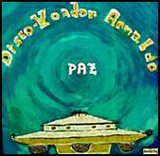
Disco
Voador – UFO – (Baratos Afins, 1987, not
yet launched in CD)
In 1987, Arnaldo created his most radical musical experience.
Independent label Baratos Afins launched this home made
record for experts and fans only: ‘Disco Voador
Arnaldo Paz’ (UFO Arnaldo Peace). It is a songbook
which captures the artist in his environment: his studio-workshop.
It is roughly recorded, but translates Arnaldo’s
musical world as it could. There you can find his sounds
experiments and personal options for specific tones;
his vibrato’s voice and his twisted keyboards.
The great surprises are the two versions for ‘Balada
do Louco’ (Ballad of the Mad’, by Arnaldo
and Rita) translated into English by Arnaldo as ‘crazy
one’s ballad’ and into French as ‘Le
foulle balada’. ‘Jesus, come back to earth’
was translated into Portuguese as ‘Jesus volte
até a Terra’. Six other songs complete
the album: ‘Eu’ (Me); ‘Rodas’
(Wheels); ‘OVNI’ (UFO); ‘Maria Lucia’
and ‘I wanna to take off every morning’.
All composed by Arnaldo, except ‘Traduções’
(Translations) in partnership with A.Alexandre.
The
title turned into cover from a painting by Arnaldo is
very Arnald-ish. It plays with double-meanings such
as disco (disc=vinyl) and disco-voador (UFO in Portuguese).
The painting brings two images which reinforce mixed
ideas: the record is a disc (vinyl) and rare = UFO (disco-voador)
since it was a limited edition and real. The word ‘peace’
drawn in the centre of the painting simulates the space’s
centre and the vinyl’s hole. When the vinyl spins
the sky also do so revealing where the UFO and the songs
are. Comments by Marcelo Dolabela, Oct/Nov 1999.
|
|
|
|
|
|
| |
| 
1-Sunshine
2-Sexy
Sua
3-Corta
Jaca
4-Oh
Trem
5-Emergindo
da Ciência
6-Sentado
ao lado da Estrada
7-É
Um Pouco Assustador I
8-Fique
Aqui Comigo
|
|
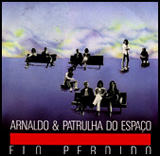
ELO
PERDIDO (Lost Link) – ARNALDO & PATRULHA DO
ESPAÇO – (Vinil Urbano, 1988, not yet launched
in CD). Producers: Arnaldo & A Patrulha do Espaço
After Loki? (1974) and before Singin’ alone (1981)
Arnaldo Baptista entered his hard rock phase, better,
very hard rock phase alongside with the band A Patrulha
do Espaco (Space Patrol). This trip started in 1975
when Arnaldo worked on a new project: the group Space
Patrol initially with Ze Brasil and then with Rufino
and Dudu (guitars); Cenoura (`Ccarrot`, nick name for
the bassist); and Arnaldo playing drums with two hi-hats.
They rehearsed at home, with small amplifiers and a
TV puggled in mute mode all the time. In 1977 the group
change its name to Arnaldo & Patrulha do Espaço
carrying on rehearsing but now with John Flavin (guitar);
Osvaldo Gennari ‘Cokinho’ (bass); Rolando
Castello Junior (drums) and Arnaldo (piano and vocal).
In the end of the year they recorded 13 songs using
two channels and with the support of Rogerio Duprat.
The material was expected to be launched by a record
company but none were interested. Named Lost Link, the
album would be released only in 1988, 11 years after
recorded, even so in a rough mix and incomplete. There
were 12 tracks: seven Arnaldo would re-record later
in its solo Singin’ Alone (1981) keeping their
original version or translating them into English or
Portuguese with small but deep alterations in their
lyrics. Therefore Elo Perdido repeats Singin’Alone:
‘O Sol’ named here ‘Sunshine’;
‘Corta Jaca’; ‘Oh Trem/Train’;
‘Emergindo da Ciencia/Coming through the Waves
of Science’ and ‘Sentado ao lado da Estradal/Sitting
on the Road Side’ (According to Arnaldo, the correct
name of ‘Raio de Sol’ is ‘Sentado
ao Lado da Estrada’, as in the previous English
translation).
New songs included: ‘Sexy Sua’, song of
love and sex inspired in Arnaldo’s ex-girlfriend
Martha Mellinger and which can be read as a cult-exercise
of libido. According to Arnaldo ‘Um Pouco Assustador’
(‘A Bit Frightening’) promotes a game of
telepathic gatherings where the players get rather scared
or end up knowing themselves better. In ‘Fique
Aqui Comigo’ (‘Stay by Me’) Arnaldo
dialogues with an unknown woman who could be partner
or audience in a mental-show chat. Comments by Marcelo
Dolabela Oct/Nov 1999.
|
|
|
|
|
|
| |
| 
1-Emergindo
da Ciência
2-É
Um Pouco Assustador II
3-Arnaldo
Soliszta
4-I
Feel In Love One Day
5-Cowboy
6-Hoje
de Manhã Eu Acordei
|
|
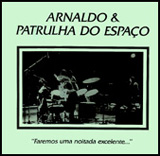
FAREMOS
UMA NOITADA EXCELENTE (We will have a great night out)
- ARNALDO & PATRULHA DO ESPAÇO – (Vinil
Urbano, 1988, not yet launched in CD). Live. Producer:
Roberto Takaharu Oka.
In May 1978 Patrulha do Espaço played with an
extra guitarist Eduardo Chermont in São Pedro
theatre (São Paulo city). The show was roughly
recorded and again launched only in 1988 (10 years later)
named ‘Faremos uma Noitada Excelent’ (we
will have a great night out).
It included the already known ‘Emergindo da Ciência’,
‘Um Pouco Assustador II’, ‘I Fell
in Love One Day’, ‘Cowboy’ and ‘Hoje
de Manhã eu Acordei’ (This morning I woke
up’), with Arnaldo improvising on the piano as
Hermeto Paschoal would do. The title was given later
by Rolando Castello Junior and embraces several Arnaldo’s
skills and insights: pianist; soloist; Franz Liszt fan
(the Hungary classic composer) and sunshine/LSD’s
lover.
These two records with Patrulha do Espaço are
two fake drafts, actually songbooks, which tell Arnaldo’s
fights and survivals. Arnaldo builds a mosaic of his
revolutionary masterpieces created in his own universe
of mad lucidity. The songs reminds projects of dialogues
between audience and artist, past and future, life and
art, science and dream revealing that there is always
something missing, something never to be found and that
at each moment we realise that it is this incompleteness
that makes us entire entities. The solo works of Arnaldo
are that: hiatus and lost links which complete each
other permanently. So let’s get new ears and welcome
this Garden of Dreams and this New Science which is
this eternal music so called Arnaldo Baptista. Comments
by Marcelo Dolabela, Oct/Nov 1999.
|
|
|
|
|
|
|
| |
| 
1-Panis
Et Circenses
2-A
Minha Menina
3-O
Relógio
4-Maria
Fulô
5-Baby
6-Senhor
F
7-Bat
Macumba
8-Le
Premier Bonheur Du Jour
9-Trem
Fantasma
10-Tempo
No Tempo
11-Ave
Gengis Khan
|
|
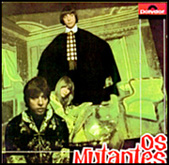
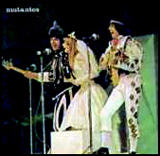
MUTANTES
(Polydor, 1968) – Producer: Manoel Barenbein
Mutante’s
first album. The band’s tropicalist record. Kind
of ‘our principles’ letter. There are 11
songs showing their proposals and further possibilities.
Arranged by Rogerio Drupat and with contributors such
as Jorge Ben (vocal and acustic guitar) and drummer
Dirceu, the album is a mix of Tropicalia fundamental
stones - ‘Panis et Circenses’, ‘Bat
Macumba’ and ‘Baby’ - and the Mutantes
anarchic irreverence. They treaded all sorts of absurd
and inconsequence. They challenged Luiz Gonzaga’s
collaborator, Humberto Teixeira, in ‘Adeus Maria
Fulô ‘ (Goodbye Maria Fulô) and dressed
Françoise Hardy as pop-existentialist in Le Premier
Bonheur du Jour. The record mixes Jorge Ben’s
trade mark ‘A Minha Menina (‘My Girl’);
a version of a not well known Mamas and The Papas’
song ‘Tempo no Tempo’ (Once There was a
Time I Thought), which is actually a non credited version
of Cesar Dias Baptista, father to Arnaldo and Sergio.
They added a pre-historic shout, a tribute to Gengis
Khan ‘Ave Gengis Khan’ and the Kafkanean
‘Senhor F’ (Sir F). The album finishes with
‘O Relogio’ (The Clock) and ‘Trem
Fantasma’ (Ghost Train). Comments by Marcelo Dolabela,
Oct/Nov 1999.
|
|
|
|
|
|
| |
| 
1-Dom
Quixote
2-Não
Vá Se Perder Por Aí
3-Dia
36
4-2.001
5-Algo
Mais
6-Fuga
Nº II Dos Mutantes
7-Banho
de Lua
8-Ritta
Lee
9-Mágica
10-Qualquer
Bobagem
11-Caminhante
Noturno
|
|
MUTANTES
(Polydor, 1969) - Producer: Manoel Barenbein
During
the next year the Mutantes (now without the article
‘Os’ - The) launched the truly Mutants-tropicalist
aesthetic. This is the most experimentalist album of
their career. There are no limits. Everything is possible.
Everything is functional in its strangeness. On the
cover the trio is dressed as Don Quixote (Arnaldo),
Sancho Pancha (Sergio) and the bride Dulcinéia
(Rita). They included a jingle recorded for Shell ‘Algo
Mais’ (Something Else). They recorded their two
big hits ‘Fuga No 2’ and ‘Caminhante
Noturno’ (Fugue No 2 and Night Walker). They ranged
from a version of ‘Banho de Lua’ (Moon Shower)
originally recorded by popular singer Celly Campello
to concrete poetry (‘Dom Quixote’) with
a little help of father Cesar Dias Baptista. There is
also a magisterial dialogue with the Tom Ze’s
insided out version of Tropicalia in ‘2001’
and ‘Qualquer Bobagem’ (Any Foolery). You
can still find the iê-iê-iê ‘Não
vá se perder por aí’ (Hei do not
get lost!) and the psychedelic ‘Dia 36’
(Day 36) this last in partnership with hippie Johnny
Dandurand. Last but not least, perhaps the first metaphoric
Brazilian song talking about Rita Lee. This album brings
even subliminally the collaboration of those who would
become the 4th and 5th Mutantes – the drummer
Dinho (Ronaldo Leme) and bassist Liminha (who is this
record played viola). Comments by Marcelo Dolabela Oct/Nov
1999
|
|
|
|
|
|
| |
| 
1-Ando
Meio Desligado
2-Quem
Tem Mêdo de Brincar de Amor
3-Ave
Lúcifer
4-Desculpe
Babe
5-Meu
Refrigerador Não Funciona
6-Hey
Boy
7-Preciso
Urgentemente Encontrar Um Amigo
8-Chão
de Estrêlas
9-Jôgo
de Calçada
10-Haleluia
11-Oh!
Mulher Infiel
|
|
A
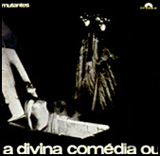
DIVINA COMÉDIA OU ANDO MEIO DESLIGADO (The Divine
Comedy or I Feel a Little Spaced Outt’ (Polydor,
1970) – Producer: Arnaldo Sacomani
After re-inventing Miguel Cervantes’s Dom Quixote,
the Mutantes turned Italian poet Dante Alighieri ‘s
The Divine Comedy into a pop-psychedelic inferno. Roughly
summarising, the 1969’s album was experimental,
this is revolutionary. Never before in Bazilian music
history had a group or artist gone so far and radical.
The Divina Comedia… buried all divisions and musical
segments. It is a fusion of pop, experimentalism, vanguard,
kitsch, rigour, informality, rock… There is a
version of ‘Preciso Urgentemente Encontrar um
Amigo’ (I need to find a friend urgently) from
Roberto and Erasmo Carlos (the kings of the so called
Brazilian iê-iê-iê). Rogério
Duprat presented his best ever arrangement for the classic
‘Chão de Estrelas’ (Floor of Stars)
from Silvio Caldas and Orestes Barbosa. The Mutantes
hit their head with Dante in ‘Ave Lucifer’
and ‘Oh! Mulher Infiel’ (Oh! Unfaithful
woman). Dinho and Liminha were already part of the group.
This album also had collaborators such as Raphael Vilardi
(vocal and acoustic guitar) and Naná Vasconcelos
(percussion). All arranged by the magisterial touch
of Rogerio Duprat.
Comments by Marcelo Dolabela, Oct/Nov 1999.
|
|
|
|
|
|
| |
| 
1-Top
Top
2-Benvinda
3-Tecnicolor
4-El
Justiciero
5-It’s
Very Nice Pra Xuxu
6-Portugal
de Navio
7-Virgínia
8-Jardim
Elétrico
9-Lady,
Lady
10-Saravá
11-Baby
|
|
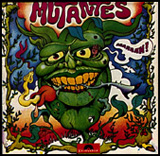
JARDIM
ELÉTRICO (Electric Garden) (Polydor, 1971) -
Producer: Arnaldo Baptista
After three albums – one tropicalist, one experimentalist
and one revolutionary – the Mutantes launched
their weirdest record. It is very much what the cover
suggests: the group messing around with their electric
paraphernalia, acoustic instruments and some stimulants.
Just have a look at this: for the first time, when Rita
Lee and Sergio Dias are also composers, the sequence
for the credits is: L for Lee, S for Sergio and D for
Dias, like in Lucy in the Sky with Diamonds. Jardim
Eletrico is an album inside a party. It brings another
hit: ‘Top Top’ an infernal hard rock; ‘Jardim
Eletrico’ a sweet English version of ‘Baby’;
and a tribute-parody of Tim Maia’s Bemvinda (Welcomed
Lady). Completing the album are ‘Technicolor’;
‘El Justiceiro’; ‘It’s Very
Nice pra Xuxu’; ‘Virginia’; ‘Lady,
Lady’; ‘Batmacumba’ and ‘Sarava’
(both a references to the Brazilian afro religious rituals).
Comments by Marcelo Dolabela, Oct/Nov 1999.
|
|
|
|
|
|
| |
| 
1-Posso
Perder Minha Mulher, Minha Mãe,
Desde Que Eu Tenha O Meu Rock and Roll
2-Vida
De Cachorro
3-Dune
Buggy
4-Cantor
de Mambo
5-Beijo
Exagerado
6-Balada
do Louco
7-A
Hora e a Vêz do Cabelo Nascer
8-Rua
Augusta
9-Mutantes
e Seus Cometas No País do Baurets
10-Todo
Mundo Pastou II
|
|
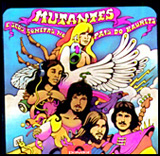
MUTANTES
E SEUS COMETAS NO PAÍS DO BAURETS (Mutants and
its Comets in the Baurets’ Land) (Polydor, 1972)
– Producer: Arnaldo Baptista
1972
is a key year for the rest of Mutantes’ life.
With the Baurets, Rita Lee said good bye to the group.
Before leaving she recorded the group’s most rock’n’roll
album. From ‘Posso perder minha mulher, minha
mãe, desde que eu tenha meu rock'n'roll’
(I can loose my woman, my mother as soon as I have my
rock’n’roll) to ‘Rua Augusta’
(São Paulo city’s famous street) the album
is pure TNT. There is a waterfall of rock’n’roll
in ‘Dune Buggy’, ‘Beijo Exagerado’
(Too Much of a Kiss), ‘A Hora e a Vez do Cabelo
Nascer’ (The Time for the Hair to be born’),
re-edited in a brilliant version by Sepultura in 1989.
Although surrounded by pure rock’n’roll,
there were also the acid smoothness of ‘Vida de
Cachorro’ (A Dog’s Life) and what would
become the group’s biggest hit ‘Balada do
Louco’ (Balad of the Mad). The psychedelic side
brings the surreal-progressive opera in ‘Tempo
no Tempo’ (Once There was a Time I Thought) from
the first album; and the Dada teaser ‘Todo Mundo
Pastou I e II’ (Everybody got messed up I and
II). Last comment on the album goes for the title inspired
in Lewis Carroll famous Alice in the Wonderland and,
of course, a reference to Bill Harlley and Its Comets.
Comments
by Marcelo Dolabela, Oct/Nov 1999.
|
|
|
|
|
|
| |
| 
1-A
e o Z
2-Rolling
Stones
3-Você
Sabe
4-Hey
Joe
5-Uma
Pessôa Só
6-Ainda
Vou Transar ComVocê
|
|
O
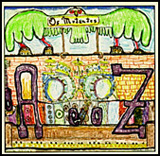
A E O Z (The A and the Z) Philips, 1992; recorded
in 1973. Producer: Mutantes After
Rita Lee left Mutantes, Arnaldo, Sergio, Dinho
and Liminha recorded a new album in 1973 unknown
to the public until 1992. O A E O Z exacerbates
the surrealist-progressive opera Mutantes e Seus
Cometas no País dos Baurets. Although independents,
its six tracks remind a long soundtrack for a
movie the kind of Atonioni’s Zabriskie Point.
It is a trip, a good trip. From the autobiographic
(by Arnaldo Baptista) ‘Rolling Stones’
to ‘Uma Pessoa So’ (One Only-Lonely
Person, which would be re-edited in 1973 in his
solo Loki?), O A E O Z sounds, as the title suggests,
the last breath of the wonderful history of Mutantes.
After a while, Arnaldo would leave the group and
Sergio, Dinho and Liminha would carry on with
the new Mutantes. But this is another history,
another mutation and another trip.
Comments by Marcelo Dolabela. Oct/Nov 1999
|
|
|
|
|
| |
| 
1-Panis
Et Circenses
2-Bat
Macumba
3-Virginia
4-She’s
My Shoo Shoo ( A Minha Menina)
5-I
Feel A Little spaced Out (ando Meio Desligado)
6-Baby
7-Tecnicolor
8-El
Justiciero
9-I’m
Sorry Baby (Desculpe Babe)
10-Maria
Fulô
11-Le
Premier Bonheur Du Jour
12-Saravah
13-Panis
Et Circenses (reprise)
|
|
TECNICOLOR
(Universal, recorded in 1970 and launched in 1999) -
Producer: Carl Holmes
‘Tecnicolor’, the pre-last trip of the Mutantes.
There are compilations and successful compilations.
Most of the times, they are a pain. They follow the
will – or bad will – of the record companies,
which are almost always trying to fit the artist’s
work into a new trend. If being romantic pushes up the
sales, the compilation shall highlight the melting side
of the artist. Hardly the artist manages it themselves
so the compilation is a masterpiece. Beatles, Madonna,
Prince, Roberto Carlos, Marisa Monte, Paralamas do Sucesso
are no exception to this rule. Particularly in Brazil,
the contracts giving rights of use are still written
as per in Stone Age. Although the artist can get some
advantages, broadly speaking, the record companies win
and the artists loose. This is common in the rock and
pop industry, one of the most profitable fields. It
hardly happens in literature, theatre, cinema and fine
arts – the artist has always a grip on his/her
work, manages it more efficiently. Therefore, the artist’s
big revenge is when the compilations are presented as
a conceptual work and not as a cheap puzzle to increase
the record companies’ profits. Without doubt Tecnicolor
follows this conceptual format when recorded in 1970.
It was, at the same time, a joke and one step ahead:
a compilation and a carrier’s album. Mutantes
re-dressed songs already recorded in really new outfits,
not only a new thread here or a new bottom there. The
Mutantes alongside with their permanently revolutionary
vision and in its third year of recordings, without
fear or shame, re-visited and re-wrote the inners of
their history.
According to the Brazilian journalist Carlos Calado,
author of the non-authorised but acclaimed Mutantes’
biography, ‘Tecnicolor’ is a virtual title,
probably named well after created. The album was recorded
in November 1970 in Paris in the Des Dames Studio. It
was produced by Carl Holmes. Following a concept of
that time, one can say that Tecnicolor was a compilation
of poems-processes: versions of masterpieces that turn
into new masterpieces.
Tecnicolor is a special anthology. It brings ‘new’
songs of the most recent albums, such as ‘Jardim
Eletrico’(1970); ‘Virginia’, ‘Tecnicolor’,
‘El Justiceiro’, and ‘Sarava’
all mixed with old works. There you can find Tropicalist’s
hits such as two versions of ‘Panis et Circences’;
‘Bat Macumba’; ‘She is my Shoo Shoo’
(an English version for Jorge Ben’s hottest hit
‘Minha Menina’) and ‘Baby’ (their
mostly recorded song with 3 versions). Tecnicolor also
houses classics such as ‘I feel a little Spaced
Out’ (Ando Meio Desligado); ‘Adeus Maria
Fulô’; ‘I’m Sorry, Babe’
(Desculpe Babe); and a tribute to the host France offering
a new version of ‘Le Premier Bonheur Du Jour’
from their first album.
They translated all songs into English, except ‘Bat
Macumba’, ‘Adeus Maria Fulô’
and of course the French song. ‘She’s my
Shoo Shoo’ got even closer of Jorge Ben’s
original. They kept only the chorus in Portuguese (Oba
Oba she’s my shoo shoo).
Tecnicolor was launched only in 2000. It surprised the
audience for sounding so modern. It surprised also because
of Sean Ono Lennon’s drawings and handwriting
used for the album’s design. The Brazilian critics
did not see Sean’s collaboration with good eyes.
They said he was not the right person for the job. Bullshit.
Brazilian prejudice only confirms Arnaldo Baptista’s
theory, our ‘released astronaut’ who every
day is immortalised in the international rock-pop scenario.
We hope the lesson will one day be learned: as Tom Jobim
would put it: The Mutantes, as well as Brazil, are not
for amateurs. Comments by Marcelo Dolabela, Oct/Nov
2005.
|
|
|
|
|
|
| |
| 
CD
I
01
- Don Quixote
02
- Caminhante Noturno
03
- Ave Gengis Khan
04
- Tecnicolor
05
- Virginia
06
- Cantor de Mambo
07
- El Justiciero
08
- Baby
09
- I'm Sorry Baby
10
- Top Top
11
- Dia 36
CD II
01
- Fuga nº II
02
- Le Premier Bonheur du Jour
03
- Dois Mil e Um
04
- Ave Lucifer
05
- Balada do Louco
06
- I Feel a Little Spaced Out
07
- A Hora e a Vez do Cabelo Nascer
08
- A Minha Menina
09
- Bat Macumba
10
- Panis et Circensces
|
|
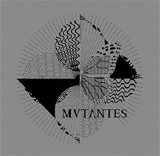
MUTANTES
AO VIVO - BARBICAN THEATRE - LONDRES
(Sony & BMG, 2006) - Producer: Sérgio
Dias.
A
volta do Mutantismo
O Rock and Roll já é um senhor de mais
de 50 anos. Enfim, o tempo lhe permitiu começar
a acertar uma dívida histórica. Isto é,
uma dívida futura: “como entender, assimilar
e conviver com seu passado?”. Como viver e entender
o “sofrer”, como cantou Tom Zé, “de
juventude”?
O escritor Rubem Braga, falando sobre a crônica
jornalística, comentou: “A verdade não
é o tempo que passa, a verdade é o instante”.
Se o Rock é volátil, um gás, como
cantou Jimi Hendrix, como viver a eternidade do instante?
Como viver esse único tempo?
B. B. King completa, este ano, 83 anos. Para os fãs
do Blues, ele não está velho. João
Gilberto está com 76 anos. E ainda é o
grande nome da Bossa Nova.
O Rock, enfim, começa a entender o jogo dialético
entre “tempo” e “instante”,
entre o que já está inscrito na história
e o que ainda esgarça, com inventividade, a história.
A volta dos Mutantes vem, em boa hora, saldar essa dívida
e responder, de vez, a questão: “se o grupo
foi e é o exemplo mais perfeito da revolução
do rock brasileiro e um dos maiores nomes do rock internacional,
por que encapsular sua trajetória em apenas cinco
anos (1968-1972) de produção fonográfica?
O acervo do Beatles, vez ou outra, é bem revisitado
por Paul McCartney e George Martin. Por que não
permitir que a revolução-Mutantes continue?
Tirando o fogo amigo (as críticas de Rita Lee
e a recusa de Liminha), quando foi anunciada a volta
do grupo, as expectativas foram as mais diversas, da
dúvida ao medo, de alívio ao “até
que enfim”.
Mas o que poderíamos esperar dessa volta? Como
o núcleo Arnaldo Baptista – Sérgio
Dias & Dinho se comportaria “quimicamente”
trinta e cinco anos depois? Quem e como substituir a
voz emblemática de Rita Lee? De que instrumental
e de quais arranjos vestir “clássicos”
que trazem o grupo em seu apogeu sob a maquinaria sonora
do maestro Rogério Duprat?
A resposta foi sábia. O grupo ressurgiu no “exílio”,
longe das expectativas e das ansiedades, em um evento
em Londres que comemorava a Tropicália para além
dos muros musicais, a mostra/exposição
“Tropicália – a revolution in brazilian
culture”. Que fez um mapeamento amplo do movimento:
música + poesia + artes plásticas + cinema
+ teatro + arquitetura + dança + política
+ teoria + história. Com um show no The Barbican
Center, em Londres, Inglaterra, em maio de 2006.
O material-show/disco, lançado agora em CD/DVD,
é impecável. O grupo, sob a batuta de
Sérgio e a criatividade de Arnaldo, conseguiu
unir o mais experimental da Tropicália aos melhores
elementos da psicodelia, de ontem, hoje e sempre.
Hoje o grupo tem dez integrantes: os oficiais: Arnaldo
Baptista, teclados e voz; Sérgio Dias, guitarra
e voz; Dinho Leme, bateria; mais a voz, em participação
mais do que especial, de Zélia Duncan, uma mutante
por natureza; os backing vocals de Fabio Recco e Esmérya
Bulgari; os teclados de Vitor Trida e Henrique Peters;
o contrabaixo de Vinicius Junqueira; e a percussão
de Simone Soul.
O repertório é um “the best”.
Há música dos cinco álbuns, da
fase heróica, do grupo. Do primeiro disco, “Os
Mutantes”, de 1968: “Panis et circencis”;
“Minha menina”; “Bat macumba”;
“Le premier bonheur du jour” e “Ave
Gengis Khan”. Do álbum “Mutantes”,
de 1969, “Dom Quixote”; “Dia 36”;
“Fuga n.2” e “Caminhante noturno”.
Do “A divina comédia ou ando meio desligado”,
de 1970, “Ando meio desligado”; “Ave
Lúcifer” e “Desculpe, babe”.
Do “Jardim elétrico”, de 1971, “Top
top”; “Technicolor”; “El justiciero”
e “Virgínia”. E do “Mutantes
& Seus Cometas No País do Baurets”,
de 1972, “Cantor de mambo”; “Balado
do louco” e “A hora e a vez do cabelo crescer”.
Sérgio Dias está em uma forma impressionante.
Zélia Duncan, mesmo participando pouco, mostra
que a escolha foi acertada. Arnaldo aparece com suas
tiradas surreais e seu vocal característico.
Dinho continua preciso e fundamental. Os demais músicos
assumem, com louvor, a função de co-participantes.
A caixa – com dois CDs e um DVD –, lançada
pela Sony & BMG, mostra na íntegra o show
de Londres. CDs e DVD trazem a mesma seqüência,
como em um jogo de mise-en-abyme, de bonecas russas,
dentro da maior, outra e outra e outra...
Começa com a poesia concreta (à maneira
mutantista) de “Don Quixote”, com suas aliterações
e paronomásias, e termina com a crueldade tropicalista
de “Panis et circensis”, de Gilberto Gil
& Caetano Veloso. Ao longo do show, o tempo vai
e volta. Pára e retorna. Como coisa móvel,
flexível, sem cronologia. Como se o grupo, na
verdade, em seu período áureo (68-72),
tivesse lançado um longo álbum quíntuplo.
As canções embaralhadas mostram melhor
a planta baixa o plano-piloto do estilo-Mutantes.
Provando, mais uma vez, que o grupo não é
apenas um nome na plêiade-Rock. Mas um “modo
de fazer”, um estilo, um subgênero, para
usarmos uma terminologia de Roy Shuker (“Vocabulário
da música pop”), dentro do próprio
Rock: o Mutantismo.
O que explica a admiração de artistas
tão diferentes em relação à
obra do grupo. De David Byrne a Kurt “Nirvana”
Cobain. Passando por Beck, Sean Lennon, Beastie Boys,
Pizzicato Five e Belle & Sebastian.
Afinal, o que foi apresentado nessa “reestréia”
é apenas um pequeno – mas significativo
– extrato do “baú dos Mutantes”,
ainda há material para pelo menos dois novos
lançamentos.
O que virá, ainda não sabemos. Mas, com
certeza, é mais combustível (não-poluente).
Provando que, ainda vale a pena continuar com e na revolução-Mutantes.
(Marcelo Dolabela - bhz out/nov 1999).
|
|
|
|
|
|
| |
| 
1-Sucesso,
Aqui Vou Eu
2-Calma
3-Viagem
ao Fundo de Mim
4-Precisamos
de Irmãos
5-Macarrão
Com Linguiça e Pimentão
6-José
7-Hulla-Hulla
8-And
I Love Her
9-Tempo
Nublado
10-Prisioneira
do Amor
11-Eu
Vou Me Salvar
|
|
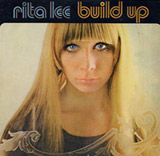
Build
Up – Rita Lee (Polydor, 1970) – Arrangements:
Arnaldo Baptista
Pop music is a mix between novelty and redundancy. In
this dialectic game we can measure the relevance of
an artist and its work. Rita Lee’s two first solo
albums, ‘Build Up’ (1970) and ‘Hoje
é o primeiro dia do resto de sua vida’
(Today is the first day of the rest of your life –
1972), can only be understood through this relationship.
You can not classify them. They are solo albums and,
at the same time, complementary to Mutantes’s
non-official discography.
In these two moments, Rita Lee was still
part of the Mutantes. Even so, she launched herself
into a solo project. So far, nothing wrong especially
when we understand the option working as oxygen in their
way.
But what really surprises here is that
Rita Lee’s two first solo albums do not follow
the obvious path taken by other artists when going from
a band to a solo career, which is ‘an individual
approach distant from the group’s proposes’.
In Rita Lee’s case, it was the same innovative
work – or an innovation under the same theme.
Apart from the name and label stamped on the vinyl,
Rita Lee by Mutantes, nobody would notice that they
were actually listening to a solo record. Even so those
are Rita Lee’s solo records, which would only
exist as so. Therefore they deserve a comment with distance
from Mutantes works. Especially if we compare ‘Build
Up’ with the tropicalia-super-experimentalist
‘A Divina Comedia ou Ando Meio Desligado’;
‘Hoje é o primeiro dia do resto de sua
vida’; and with the lysergic-psychedelic ‘Mutantes
e seus cometas no Pais dos Bauretz’, launched
at the same time. Are there two characters looking for
an author? Or would be one character multiplied into
two authors? Both albums’ blueprints are quite
the same:
1) Basic core composers: Arnaldo Baptista,
Rita Lee and Sergio Dias plus Liminha;
2) Arranged by Arnaldo and played by Mutantes.
‘Build Up’ was created as
a soundtrack for Rodhia’s event ‘Build Up
Electronic Fashion Show’, an important fashion
show of those days called Fenit (Textile Industry International
Fair). The album tells the story and moves of an artist
heading to the stardom. There are songs by Arnaldo &
Rita: ‘Sucesso, aqui vou eu’ (‘success
here I go’ or ‘Build Up’) and ‘Macarrão
com Linguiça e Pimentão’ (‘pasta
with sausage and pimento). Elício Decário,
who has collaborated in ‘A Divina Comedia’,
‘Ave Lucifer’ and ‘Hey Boy’,
appears again in ‘Build Up’ and in partnership
with Rita in ‘Hulla-Hulla’, ‘Tempo
Nublado’ (Clouded Weather) and ‘Eu Vou me
Salvar’ (I will save myself). He also contributed
as solo writer in ‘Precisamos de Irmãos’
(We need brothers’) and ‘Prisioneira do
Amor’ (Prisoner of Love). Arnaldo wrote ‘Calma’
(Stay Cool). ‘Build Up’ also brings the
first solo songs arranged and/or written by Rita only:
‘Viagem ao Fundo de Mim’ (Inner Deep Trip)
and ‘Jose’, a second version of George’s
Moustaki’s original song, also recorded by tropicalist-bossa
nova Nara Leão. ‘Build Up’ also houses
the bolero Beatles inspired ‘And I love Her (And
I love Him)’.
Build Up, the song, works as a script
for the whole album. Although Build Up, the album, establishes
the idea of ‘building up a public image’,
its songs suggest ‘building the individual, intimate
side of Rita’, an inner trip as showed in ‘Ao
Fundo de Mim’ (Me in depth). Apart the non-sense
‘Macarrão com Linguiça e Pimentão’
(Pasta with sausage and pimento) and the lyricism of
‘Jose’ (Joseph), all other songs are written
using the ‘I’ pronoun, with variations of
its plural WE and unfolding into I + YOU. “I can
even see/ my name flashing/ and the world clapping/
when I am singing/ when I am dancing/ I wanna be a star…/
I would say good bye/ to my dreams/ Success, here I
go…/ I will fight/ I will get there…Hold
on a minute/ what I really want/ is to escape from you…”
“In slow motion I will fly/ and
feel your love…”
“I need songs and friends/ Love, flowers and shelter…”
“I am going to an island…”
“Where would you be, my love?/ Where would you
be?”
“I will save myself/ I will save myself/ To guarantee
my eternal life”
(Comments by Marcelo Dolabela – Jul/Aug/ 2005.
|
|
|
|
|
|
| |
| 
1-Vamos
Tratar da Saúde
2-Beija-me
Amor
3-Hoje
é o Primeiro Dia do Resto da Sua Vida
4-Teimosia
5-Frique
Comigo
6-Amor
Branco e Preto
7-Toroleite
8-Tapupukitipa
9-De
Novo Aqui Meu Bom José
10-Superfície
do Planeta
|
|
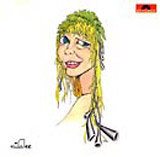
HOJE
É O PRIMEIRO DIA DO RESTO DE SUA VIDA (Today
is the first day of the rest of your life) (Polydor
- 1972) - Arrangements: Arnaldo Baptista.
Two years after ‘Build up’ Rita Lee launched
her second solo album. That was a different history
all together. Before Rita was still a member of Mutantes.
Now, with Mutantes taking the progressive rock path
influenced by Yes, the group would send her off to the
Bauretz’s Planet. Her second record is a farewell
album and, at the same time, the one that sounded more
Mutantes than any other. None of the six records from
the first phase – 1968-1972 – were composed
exclusively by Mutantes themselves: Arnaldo-Rita &
Sergio+Liminha. All others counted with external collaborators.
The
strong censorship regime of those days cut up some lyrics
that from acids turned into lyric. In “Beija-me,
amor” (Kiss me, love) we hear: “…To
feel your taste/ mixed with a taste of love/ chewing
between my teeth” actually originally was: “To
feel the saliva/ the spit’s taste/ melting through
my teeth…”, told us Carlos Calado, in his
Mutante’s biography, page 285.
The
only collaborator (and for the first time as part of
the band) was that of the singer, composer and player
Lucia Turnball as backing vocal. In 1973, Lucia would
become Rita Lee’s partner in the project Cilibinas
do Éden. This duo would also work as a base for
Rita Lee’s further group, Tutti Frutti, which
included Luiz Sergio (guitars) and Lee Marcucci (bass).
Their first album, “Atrás do porto tem
uma cidade” (behind the port there is a city),
was a come back or very similar to Mutantes first album.
As in the 1968’s album, “Atrás do
porto…” stamps a drawing made by Rita. Its
graphic simplicity hides a basic element of the new
group: the humour. This was hided or simply abandoned
in the new Mutantes driven by progressive rock.
‘Hoje
é…’ can be translated into final-solo-collective-catharses
towards this element. If in “Bauretz” the
humour is submerse, in this solo album it is explicit.
Its musical texture sometimes sounds also progressive.
The
album has two distinctive chapters:
1) Biographic, following the path of ‘Vamos tratar
da saúde’ (Let’s take care of our
health) and ‘Hoje é o primeiro dia do resto
da sua vida’.
2) Humoristic in “Amor em branco e preto”
(love in black & white, a non-official anthem to
Corinthians Football Club); “Tapupukitipa”
and “Tiroleite”. This was perhaps the only
successful attempt to make a joke out of the hippie
generation’s values. This song, although not turned
into a radio-TV success, is one of the big hits in open
microphone sections.
If
this album is a return to Mutantes’ beginning
it is also an album-project of what would be Rita Lee’s
solo career. It was an amalgam of the anthropophagic
formula created by Brazilian poet and writer Oswaldo
de Andrade: love/humour.
After
1972, neither Rita nor Mutantes would be the same again.
Each one followed their own paths. All, however, within
a path that was trailed before. From that we can understand
that the group’s first phase does not compile
five albums but eight – their five plus the later
‘Technicolor’, recorded in 1970 and launched
only in 1990, and Rita’s two solo albums.
Is
this discography completed? Not for me. Actually, this
phase has nine records. I would include the first Arnaldo’s
solo album, ‘Lóki?’ (1974). What?
Please, just re-read the above. All that was said for
Rita’s two solo albums applies, in minor or greater
degree, to ‘Lóki?’. I would stop
there but you can still include the album-manifesto
‘Tropicalia – ou Panis et Circensis’;
‘A Banda Tropicalista de Rogerio Duprat’
(The Tropicalist Band of Rogerio Duprat - 1968); and
the single by Caetano Veloso with four songs: ‘A
Voz do Morto’ (The Death’s Voice); “Baby”;
‘Saudosismo’ (nostalgia) and ‘Marcianita’.
All these songs were recorded live in 1968. Comments
by Marcelo Dolabela, Jul/Aug 2005. |
|
|
| DISCOGRAFIA
COMPLETA EM ARQUIVO TEXTO: clique
aqui |
|
|