|
ARNALDO BAPTISTA - Chronological Biography
MULTI-INSTRUMENTALIST, COMPOSER, WRITER, VISUAL ARTIST
July 6th, 1948 – Baptista is born in the city of São Paulo to pianist, concert performer and composer Clarisse Leite Dias Baptista and journalist, poet and opera singer César Dias Baptista.
1955 to 1979 – He takes different courses: Music: experiencing classical piano with his mother Clarisse Leite throughout his childhood and adolescence, and takes classes with Zilda Leite Rizzo (1955-1958); classic double bass, acoustic guitar, jazz-rock piano. Dance: modern dance and classical ballet at Ballet Stagium dance company (in the 1970s); classical ballet with Eugênia Feldorowa (1974-1979). Languages: English, German, Esperanto, as well as Russian with Igor Valesvisky (1976-1979).
1961 to 1967 – Arnaldo participates in the creation of various groups as musician and composer; such as Só Nós, Wooden Faces, Sand Trio, Six Sided Rockers, and O Konjunto.
1966 – He founds the band Os Mutantes with his brother Sergio Dias and Rita Lee.
1967 to 1973 –Os Mutantes participate in various music festivals, alongside Tropicalists Gilberto Gil, Caetano Veloso, Rogério Duprat, and others. He goes on tour with his band around the country and abroad.
1970 and 1972 – Baptista is the record producer of the first two Rita Lee solo albums: Build Up and Hoje É o Primeiro Dia do Resto de Sua Vida (Today is the first Day of the Rest of Your Life).
1972 – He records the album O A e o Z with Os Mutantes, of which Rita Lee was no longer part.
1973 – Arnaldo leaves Os Mutantes.
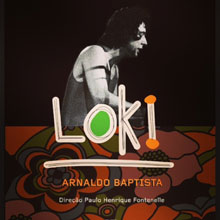
1974 – Baptista launches his solo album Loki?, acclaimed by many critics as one of the most influential and important works in Brazilian rock’n’pop.
1977 – His only child, Daniel Mellinger Dias Baptista, whom he had with actress Martha Mellinger, is born.
1975 to 1978 – He founds the band Patrulha do Espaço (Space Patrol) and continues to compose classic rock repertoire. In 1988, the band launches two albums with the label Vinil Urbano: Elo Perdido (Lost Link) and Faremos uma Noitada Excelente (We Will Make It an Excelent Night Out).
1981 – Arnaldo records another striking album Singin’Alone, playing all the instruments and also acting as record producer. The LP was launched in 1982 with the label Baratos Afins, and was later re-launched in CD by EMI-Virgin (1995), including the bonus track “Balada do Louco”, re-recorded in Arnaldo’s voice.
1981 – He does a solo show, Shining Alone, at TUCA-SP Theater, recorded by Luiz Calanca and launched in the digital environment in 2014.
1980-90s - Arnaldo handwritten ten books from the middle of 80 to 90s, still unpublished: O Abrigo (The Shelter);- Elástico (Elastic);- Retilíneas (Rectilinear); Viagem T2=Mc>2; Acordo (I Wake Up); Endoterismo (Volumes I, II e III) (Endothermism);- A Insegurança Exata (Exact Insecurity)- Entre?! (Come In or In Between).
1982 – Baptista moves to Juiz de Fora city, in Minas Gerais, with his wife Lucinha Barbosa, where they currently live. In this period, he begins to produce more as a visual artist, devoting himself to this as much as to music.
1984 – Launch of the album Disco Voador, with Baratos Afins label.
1989 – Eldorado Records releases the compilation Sanguinho Novo - Arnaldo Baptista Revisited (Young Blood), with bands of the rock’n’pop movement of the 80s recording classic songs majoritarily from Arnaldo’s solo works. The bands: Sex Explicit, 3 Men, Vzyadoc Moe, Sepultura, The Last Number, Paulo Miklos, Akira S e As Garotas que Erraram, Ratos de Porão, Fellini, Atahualpa i Panquis, Scowa and Maria Angelica Não Mora Mais Aqui.
1990 –First paintings and drawings exhibition, at theCultural Center of the Federal University of Minas Gerais, curated by FabianaFigueiredo.
1992 – Paintings and drawings exhibition in São Paulo, curated by Paulo Maluy and Paula Amaral, and at the Cultural Center of the Federal University of São Carlos, curated by Fabiana Figueiredo. He begins to paint t-shirts and cards.
1993 - Kurt Cobain, in his passage through Brazil, leaves a note for Arnaldo Baptista, speaking about his admiration for his work.
1993 – Patricia Moran launches her short documentary Maldito Popular Brasileiro: Arnaldo Baptista. In an interview for the doc, maestro Rogério Duprat declares: “The Mutants were the most important thing in the Tropicalism (a brazilian cultural movement of late 60s). And no one could make this clear. But I know well, that the head of all this, the head of The Mutants was Arnaldo Baptista. I say and repeat: Arnaldo Baptista is responsible for everything that happened from 1967 onwards ”.
2000 - David Byrne releases the entire Os Mutantes’ discography in the USA for his Luaka-Bop label.
2000 – Arnaldo makes a special appearance with Sean Lennon at the Free Jazz Festival.
2001 – He participates in the CD Tribute to John Lennon, Dê Uma Chance à Paz, with vocals for two versions of “Give Peace a Chance”: one with Charles Gavin and Andreas Kisser, and the other with Miko Hatori, Timo Ellis and Duma Love (Cibo Matto), produced by Yuka Honda.
2004 – Launch of Let It Bed, produced by John Ulhoa. The album received acclaimed reviews and won the “Prêmio Claro de Música Independente” award. It is also included in the top ten albums of 2005 by UK Mojo magazine.
2006 to2007 – Arnaldo goes on an international tour with the reunion of Os Mutantes.
2008 – Canal Brasil TV channel launches the documentary Loki! Arnaldo Baptista, directed by Paulo Henrique Fontenelle. The film wins over 14 prizes in national and international film festivals.
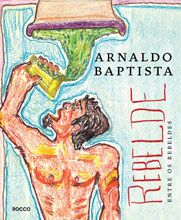
2008 – Baptista launches, with Rocco publishers, the novel Rebelde entre os Rebeldes (Rebel Among the Rebels), written in the 1980s.
Since 2010 – He enters the official visual arts scene, represented by Galeria Emma Thomas gallery (SP), participating in the collective exhibition Arsenal. 2012: first solo exhibition, Lentes Magnéticas (Magnetic Lenses), at Galeria Emma Thomas. The Gallery began to present the artist in various editions of the SP-Arte international fair. 2013: he takes part in the collective exhibition Ateliê dos Músicos, at Sesc-Vila Mariana. 2013: collective exhibition Brasil: Arte/Música, at Zacheta National Art Gallery, Warsaw, Poland, curated by Magda Kardasz. 2014: Baptista is invited by curator Rodrigo Moura for the Solo Project of the SP-Arte. 2014: Holds his second solo exhibition, Exorealismo, at Galeria Emma Thomas, curated by Marcio Harum. 2015: participation in the Projeto Solo em Arte e Música at Epicentro Cultural, curated by Mariana Coggiola and Cassiano Reis. > Interview about the first solo exhibition Lentes Magnéticas (Magnetic Lenses-2012) at Emma Thomas Gallery, São Paulo city-Brazil, with subtitles in English.
https://www.youtube.com/watch?v=L65cIdYI6lM
Since 2011 – Arnaldo Baptista returns to the stage at Sesc Belenzinho Theater, São Paulo city. He went then touring with his concert Sarau o Benedito?, in which he sings and plays a grand piano, after 30 years without performing in this format. Baptista perform at renowned theaters and events, such as Theatro Municipal de São Paulo (8th Virada Cultural); Teatro de Santa Isabel, Recife city (MIMO 2012); Salão de Atos da Universidade Federal do Rio Grande do Sul (2012), Centro de Cultura Lúcio Fleck, Sapiranga city(2013); Teatro Cine Brasil Vallourec, Belo Horizonte city (2014), Festival Psicodália (2015), and the strong Sesc theaters circuit. 2017 - Coquetel Molotov in Recife city and 3 nights at Caixa Cultural Theater in Brasília. 2018 - Caixa Cultural São Paulo Room. All shows had tickets sold out.
2012 – His short story “The Moonshiners” is translated and published in the “Ilustríssima”, Folha de São Paulo newspaper.
2013 – He creates live and at the piano, the soundtrack for George Méliès’ short-film A Trip to the Moon in the event “Noite Branca”, Palácio das Artes, International Short Film Festival of Belo Horizonte.
2013 – Arnaldo voices The Mad Hatter for the play Alice in Wonderland, performed by Giramundo group and its puppet theater.
2013 –The top 15 of São Paulo city scene of producers, DJs and creators of various influences produced 12 versions of “To Burn or Not To Burn”, from the album Let It Bed (2004). Launched by D-Edge Label. The producers are: Rotciv, Monsters at Work, Glocal, Flu, Tomash, Pejota Fernandes e Hubert, BMind e Roger Brito, Zopelar, Renato Patriarca and Marco Andreól, with Natalia Barros’ vocals), L_cio, Holocaos and DJ Magal vs L_cio. Available on iTunes.
2013 e 2014 – He launches, with cdbaby.com, his entire solo work in the digital environment.
2014 - The band Terno is invited to Project 74 Rotations, by cultural center SESC Santana, São Paulo, which proposes reinterpretations of Brazilian music’s classics. Terno chooses the album Loki? https://www.youtube.com/watch?v=H3X57uyD8es
2015 – Baptista and Canal 3 launch a box with five albums of his solo career, in Compact Disc format.
2016 – Arnaldo Dias Baptista is selected by Caixa Cultural São Paulo to hold the individual exhibition Transmigração (Transmigration) curated by Marcio Harum. Web site: http://transmigracao.com.br/
2017 - Polysom record releases the classic album Loki? (1974) in vinyl 180, all original, with insert with lyrics (unpublished). The disc was specially mastered for vinyl by Ricardo Garcia in Magic Master from the original tapes provided by Universal Music. The text for this launching was signed by renowed music journalist Jotabê Medeiros.
2017 – May to Sept: Carminha Macedo gallery, Belo Horizonte city: solo exhibition “Resistência: a ciência mutante da existência” (“Resilience: the mutant science of the existence”), with never paintings, curated by Fabiana Figueiredo.
2017 – June. Arnaldo takes his concert Sarau o Benedito? for 3 sold out nights at Caixa Cultural Theatre, in Brasília city, Capital of Brasil. In October, opens the Coquetel Molotov Festival in Recife city.
2018 – May - Arnaldo takes his concert Sarau o Benedito? for 3 nights at Sala Caixa Cultural São Paulo. On the 4º night, a band led by Rod Krieger takes the stage to pay a tribute to Arnaldo, with artists such as Lulina, Karina Buhr, Hélio Flanders (Vanguart) and China, all singing songs from Arnaldo’s solo works after Loki?. The musicians of the band were: Eduardo Barretto (bass), from Les Boomerangs and Leela; Pedro Leo (drums) from Flying Chair; and Charly Coombes (keyboards), who now lives in Brazil and is known by his three solo albums and as an ex-member of the brit pop band Supergrass.
2019 – May– Rod Krieger, invited by Alexandre Matias, heads the tribute “Loki 4.5” to Arnaldo Baptista at Centro Cultural São Paulo (CCSP), focusing on the album Loki?, celebrating its 45º anniversary. For this edition, Krieger invited Tatá Aeroplano, Thunderbird, Hélio Flanders e Cinnamon Tapes for the lead vocals. The band was formed by Rod Krieger himself, (guitar and vocals); Rafael Stanguini (keyboards), Eduardo Barretto (bass), Pedro Leo (drums).
2020 – julho – Rod Krieger and Arnaldo Baptista invite fans and friends, via social media, to send videos with their versions of Arnaldo’s solo works after album Loki?. “Homenagem Arnaldo Baptista 7.2” is the third of a series of tributes. More than 70 people attended, mostly youngsters, girls and boys, sending loving and sensitive versions, which are all organised in an already historic playlist. All in celebration of Arnaldo’s 72nd birthday. To listen and watch the tributes, follow the link> https://bit.ly/3k4w7xl
2011-2022 – The top 15 of São Paulo city scene of producers, DJs and creators of various influences produced 12 versions of “To Burn or Not To Burn”, from the album Let It Bed (2004). Launched by D-Edge Label. The producers are: Rotciv, Monsters at Work, Glocal, Flu, Tomash, Pejota Fernandes e Hubert, BMind e Roger Brito, Zopelar, Renato Patriarca and Marco Andreól, L_cio, Holocaos and DJ Magal vs L_cio. This material is relanched in 2022, including new remixes by DJ Mari Rossi, Tata Ogan, Renato Ratier and Galiza. Watch the launch video interview> https://arnaldodiasbaptista.com.br/english/2022/02/21/electronic-music-joins-arnaldo-baptistas-manifest-for-clean-energy/.
February 2022 – Arnaldo Dias Baptista is gifted by his fans, designer Ana Clara Piet and creative director Ray Virmond, with the virtual gallery arnaldodiasbaptista. Visitors are able to browse all of Arnaldo's exhibitions from 2010 to today > https://arnaldodiasbaptista.com.br/english/
2023 – Arnaldo is invited by Antofágica Publishers to illustrate their edition of The Wizard of Oz, by Lyman Frank Baum. In addition to the edition's illustrations, Arnaldo also wrote his presentation. The new edition of The Wizard of Oz was translated by Davi Boaventura and afterwords by the writer and researcher Carol Chiovatto and the writer, illustrator and screenwriter Janaina Tokitaka. Arnaldo’s book presentation can be read in this article by Jotabê Medeiros. > https://farofafa.com.br/2023/05/17/entre-fadas-e-travesseiros-travessos/
2023 – On December 6th, publishing Editora Grafatório, from Londrina-PR, Brazil, leaded by Felipe Melhado and Pablo Blanco, launches Ficções Completas (Complete Fictions), which compiles all of Arnaldo Dias Baptista's fictional writings, surprisingly tuned in the present time. There are three texts: “O Abrigo” (The Shelter), a tale with metaphysical twists that narrates the escape from a Planet Earth rendered uninhabitable; “The Moonshiners”, a short story originally written in English, portraying the meeting between two humans and two aliens who form a kind of interplanetary flower power commune; and, finally, “Rebelde Entre os Rebeldes” (Rebel Among Rebels), a novel with epic contours, contemplating colonies and space battles, and which more clearly develops Arnaldo's philosophical, mystical, ethical and aesthetic concerns. Of the three texts, only Rebelde Entre os Rebeldes had previously been published in book form. However, the present version is radically different, without major editorial interference, preserving the unique characteristics present in Arnaldo's original manuscripts. The edition also features complementary texts written by journalist, biographer and cultural critic Jotabê Medeiros, and researchers André Araújo and Fernando Silva e Silva. The book is launched at an event at Galeria Vermelho, in São Paulo, on December 6th.
By
Sônia Maia.
Site | Facebook | Twitter | YouTube | Instagram
Arnaldo Dias Baptista Visual Works
Listen: Spotify > Arnaldo Baptista
Buy: | iTunes | A Loja de Discos
__________________________________________________________________
BIOGRAPHY
|